How to Fix Common Squat Form Mistakes

The squat ranks among the most valuable exercises in any strength routine, yet squat form mistakes remain some of the most common issues you see on gym floors everywhere. A poorly executed squat does more than limit results. It can place unnecessary strain on the knees, hips, and lower back, turning a highly effective movement into a source of discomfort or injury.
At gymfitnesses, we regularly hear from readers who want to squat correctly but do not know what they do wrong. This article walks through the most frequent squat form mistakes, explains why they happen, and offers practical corrections so you can squat with confidence and protect your joints along the way.
Why Proper Squat Form Matters
The squat works nearly every major muscle group in the lower body, including the quadriceps, hamstrings, and glutes, while also engaging the core for stability. When performed correctly, it builds functional strength that carries directly into everyday movements like standing up from a chair, climbing stairs, or picking something up off the floor.
When form breaks down, however, the exercise stops working the intended muscles efficiently and instead shifts stress onto joints that the body never designed to absorb that load. Over time, repeated squatting with poor mechanics can lead to chronic knee pain, lower back discomfort, or hip tightness, even in people who train consistently.
Common Squat Form Mistakes and How to Fix Them
Most squat form mistakes fall into a handful of recurring patterns. Recognising them marks the first step toward correcting your technique.
Letting the Knees Cave Inward
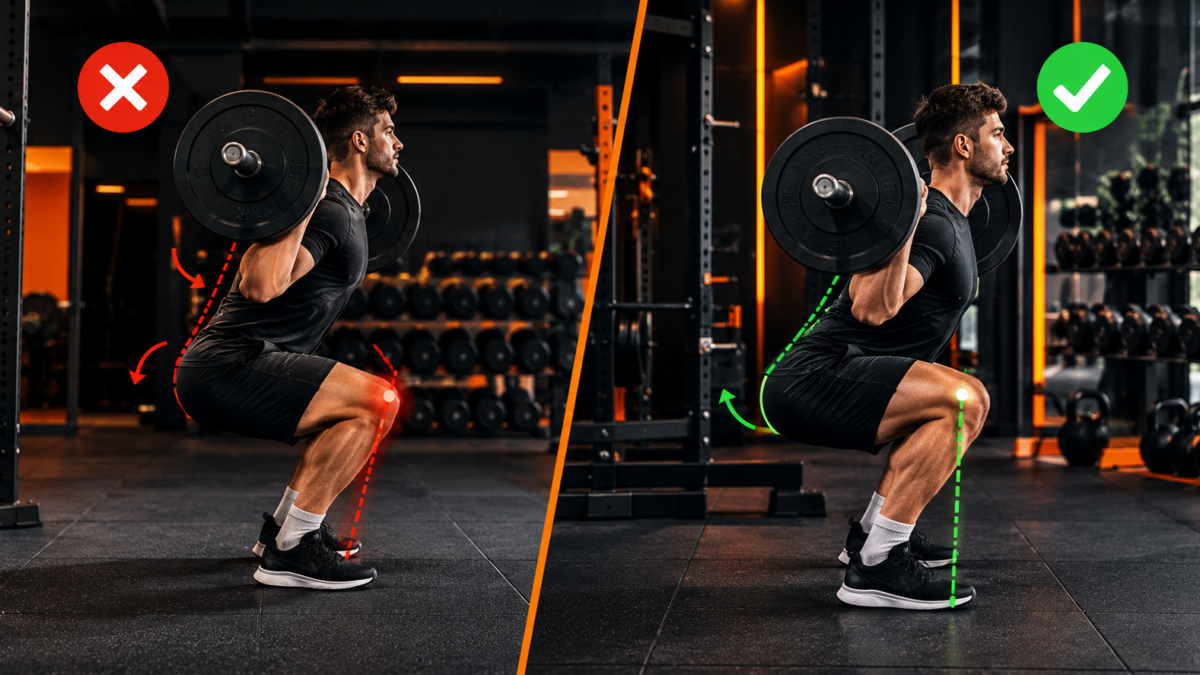
One of the most frequent squat form mistakes involves the knees collapsing inward as you descend or push back up. This pattern, sometimes called knee valgus, places excess stress on the ligaments surrounding the knee joint.
To fix this, focus on actively pushing your knees outward in the direction of your toes throughout the movement. Strengthening the hip abductors through exercises like banded lateral walks can also help correct this pattern over time, since weak hip muscles often contribute to knees caving in under load.
Rounding the Lower Back
Lower back rounding, particularly at the bottom of the squat, shifts load away from the legs and onto the spine, increasing injury risk. This mistake often happens when someone squats deeper than their hip mobility currently allows.
Correcting this starts with maintaining a neutral spine throughout the movement, keeping your chest lifted and core braced. If rounding occurs before reaching full depth, it often makes sense to squat to a slightly higher point until mobility improves, rather than forcing a deeper range of motion that compromises your back.
Lifting the Heels Off the Ground
Some lifters shift their weight forward onto their toes during a squat, causing their heels to lift slightly off the floor. This reduces stability and shifts stress toward the knees rather than distributing it evenly through the legs.
This mistake often stems from limited ankle mobility. Practising ankle stretches before training and consciously driving weight through the heels and mid-foot during the squat helps keep your base stable throughout the entire movement.
Not Reaching Adequate Depth
Partial squats, where the hips do not lower past knee level, limit muscle engagement and reduce the overall benefit of the exercise.This mistake occurs commonly among beginners who feel unstable or unsure how low to go.
Working on hip and ankle mobility gradually allows for deeper, safer squats over time. Bodyweight squats, goblet squats with a light weight, or squatting to a box at an appropriate height can help build confidence and range of motion before adding heavier resistance.
Looking Up or Down Excessively
Head position seems minor, but tilting the head too far up or down can affect spinal alignment throughout the squat. Looking too far upward often encourages lower back arching, while looking too far down can contribute to rounding.
Keeping your gaze fixed on a point slightly ahead and at a neutral height, rather than directly up or down, supports a more stable spine position from start to finish.
Benefits of Correcting Squat Form Early
Addressing squat form mistakes sooner rather than later carries several clear advantages:
- Reduced injury risk: Correct mechanics distribute load appropriately across muscles rather than concentrating stress on vulnerable joints.
- Better muscle activation: Proper form ensures the quadriceps, hamstrings, and glutes all contribute effectively to the movement.
- Increased long-term progress: Lifting heavier weight safely becomes possible once your form becomes consistent and reliable.
- Improved confidence under load: Knowing your technique stands sound allows you to focus on effort rather than worrying about injury.
- Transferable strength: Correct squat mechanics support everyday movements, from carrying groceries to playing with children or grandchildren.
Risks of Ignoring Squat Form Issues
Continuing to squat with uncorrected form carries genuine risks that tend to compound over time. Persistent knee valgus can gradually strain the ligaments that stabilise the knee, sometimes leading to chronic discomfort during other activities beyond the gym. Repeated lower back rounding under load raises the risk of disc-related issues, particularly as weight increases over months of training.
Ignoring these patterns rarely causes an immediate, obvious injury. Instead, the damage tends to build gradually, which makes early correction far more effective than waiting until pain forces a change. Anyone dealing with ongoing joint pain during squats should consult a qualified physical therapist or sports medicine professional before continuing to train through discomfort.
Practical Steps to Improve Your Squat
Improving squat form does not require starting from zero. A few consistent practices make a noticeable difference over a few weeks of focused attention.
- Record yourself squatting from the side and front to spot patterns you cannot feel in the moment.
- Reduce the weight temporarily and focus entirely on form until the correct movement feels natural.
- Incorporate mobility work for the ankles and hips a few times a week to support proper depth and alignment.
- Ask a qualified trainer or experienced lifter to watch a few sets and provide feedback.
- Progress gradually, adding weight only once your current form feels consistent and controlled.
Conclusion
Squat form mistakes occur commonly, but nearly all of them respond well to focused correction and patience. Whether the issue involves knees caving inward, a rounding lower back, rising heels, insufficient depth, or head position, each problem has a practical fix that improves both safety and results. Taking the time to address these patterns early protects your joints, builds a stronger foundation, and allows you to progress with heavier weight down the road without unnecessary setbacks.
Frequently Asked Questions
Q: Why do my knees cave in during squats?
A: This often happens due to weak hip muscles or a lack of conscious effort to push the knees outward, and it usually improves with targeted hip strengthening exercises.
Q: Is it bad to squat without going all the way down?
A: Partial squats reduce muscle engagement and overall benefit, though building toward full depth gradually proves safer than forcing it before your mobility allows.
Q: Should my heels stay flat during a squat?
A: Yes, keeping your heels grounded improves stability and helps distribute load evenly through your legs rather than concentrating stress on the knees.
Q: Can poor squat form cause long-term injury?
A: Yes, repeated squatting with incorrect mechanics can gradually strain the knees or lower back, particularly as the weight used increases over time.
Q: How can I check my own squat form?
A: Recording yourself from multiple angles or asking a qualified trainer to observe your technique offers two effective ways to spot form issues you cannot feel yourself.
Q: Do I need special equipment to fix squat form issues?
A: No, most corrections rely on mobility work, lighter weight, and focused practice rather than specialised equipment.